Mira Lafontaine

The setting · PDC

Welcome to Porte du Coeur

Gateway to the West, Heart of Rebellion. Porte du Coeur, affectionately (or not so) known as PDC, is a megacity sprawling out from the confluence of the Illinois and Mississippi Rivers through the meeting of the Missouri and Mississippi, straddling all three like a massive urban spider.

Most of my stories take place here.

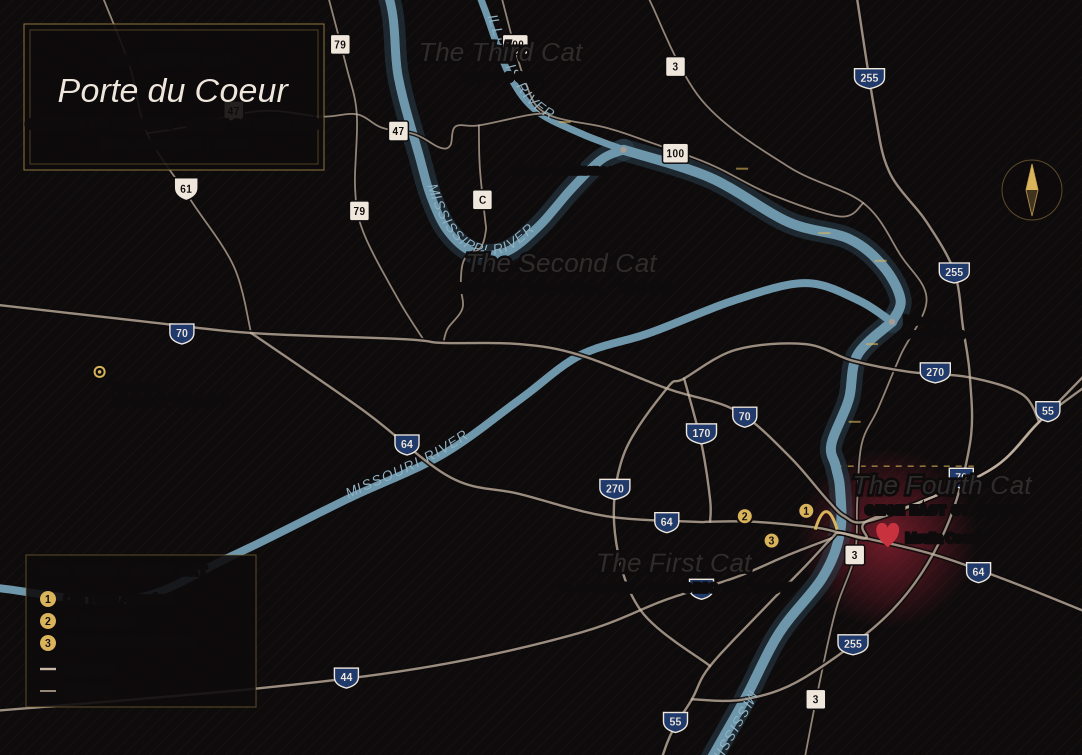
Map of Porte du Coeur, a city about the size of New York running along the rivers from the Illinois confluence through old St. Louis, with its major interstates. The First Cat lies south of the Missouri River; the Second Cat, the Nouveau Quartier, north of it; the Third Cat, The Docks, spans both banks of the Illinois River and the Mississippi's east shore; the Fourth Cat, once East St. Louis, lies south of it. Innsbrook sits outside the city to the west, just south of I-70.
The four Cat Banks of Porte du Coeur. Tap the map to open it full size.

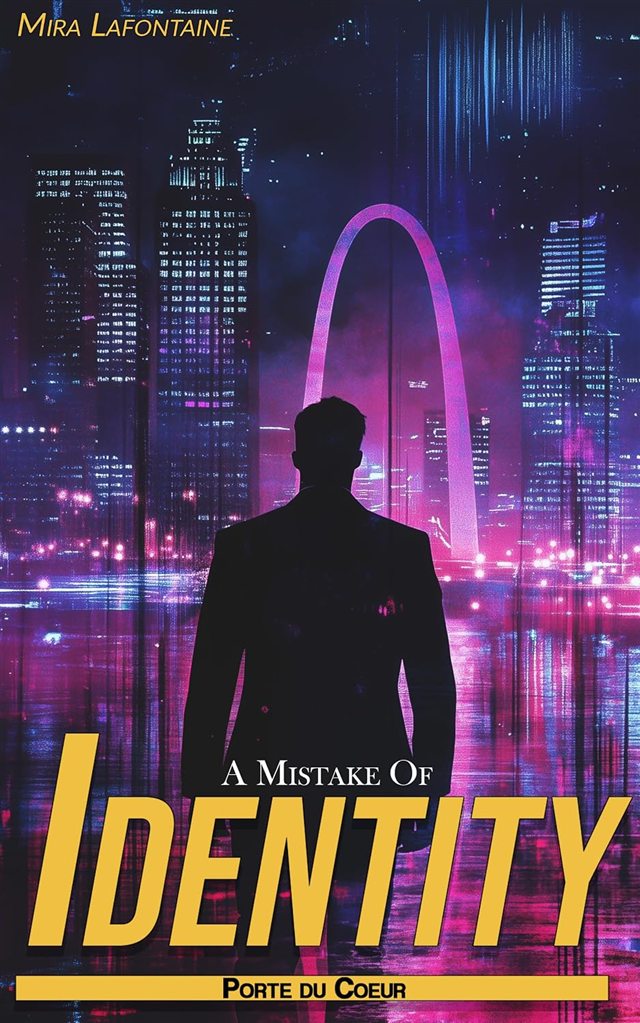
What was once St. Louis has disappeared into PDC's sprawl. Its historic neighborhoods are now just districts of a larger metropolis, the old boundaries dissolved as the city grew exponentially through the late 20th century into a powerhouse that rivals Los Angeles and New York. Locals call the old city "Old Town." The Gateway Arch, once at the city's edge, now stands at the heart of PDC as its most recognizable and beloved landmark.

PDC's character comes from three waves of French immigrants, each of which left its mark on the city's culture and its language.

  1. 18th century

    The river French

    The first French settlers established the Missouri French (Paw-Paw) dialect, the language of river trade and early commerce. It survived along the riverways and in working-class neighborhoods, mixing with Native American languages and English into a local patois.

  2. Mid-19th century

    The Québécois

    Working-class families fleeing hardship in Quebec brought Québécois French and settled in what would become The Docks and parts of the Fourth Cat. You can still hear them in the casual French of the entertainment districts.

  3. Mid-20th century

    The Great Migration

    When famine swept France and Belgium, aristocrats and industrialists fled too, and many chose PDC. They brought Parisian French, refined customs, and a revolutionary spirit: a militant devotion to workers' rights, social justice, and the right to civil disobedience that remade a conservative Midwestern city into something new.

The language

PDC French

Over decades the three dialects blended into a fluid spectrum. Locals shift between them depending on where they stand and who they're talking to.

ParisianCrisp and correct, the French of boardrooms and old money.
Paw-PawDock workers slide between it and English mid-sentence.
QuébécoisThe slang of the Fourth Cat, mixed with all three.

The districts

The Cat Banks

The rivers carve the city into four regions, the Cat Banks, from the French quatre. Each has its own architecture, its own people, and its own kind of business.

South of the Missouri River

The First CatOld Town · historic St. Louis

The heart of the old city and the hub for tourists and local business. The Gateway Arch, the St. Louis Zoo, the Shaw Botanical Garden, and the Old Town Aquarium are all here, along with the headquarters of several major companies. The Great Migration's elite built their fortunes in the First Cat.

North of the Missouri River

The Second CatNouveau Quartier · "the NQ"

Once modest suburbs, now the city's most luxurious address. Glass-and-steel towers house PDC's wealthiest residents above tree-lined avenues, Michelin-starred restaurants, elite private schools, and boutiques stocked straight from Europe.

Both banks of the Illinois River and the Mississippi's east shore

The Third CatThe Docks

PDC's industrial heart and its main shipping and export center: ports, warehouses, and freight moving by water. Beneath the surface, the real influence is said to belong to long-standing, questionably legal "business organizations" that have worked the waterfront for generations.

East of the Mississippi, south of The Docks · once East St. Louis

The Fourth CatThe entertainment district

At its heart stands the Moulin Coeur, inspired by Paris's Moulin Rouge and crowned with a rotating heart-shaped windmill lit in crimson. Around it: casino resorts to rival the Las Vegas Strip, world-class theaters, carefully regulated opium lounges, jazz clubs and cabarets, and licensed brothels operating openly under PDC's progressive laws and worker protections.
The unwritten rules

Tolerance and defiance

PDC's police are mostly locals who grew up understanding the city's social contract. They keep a light touch, focusing on violent crime and consumer protection rather than morals. Legalizing and regulating the traditionally illicit wasn't only practical; it came from the population's stubborn resistance to government overreach.

Respect the community. And never, ever betray the city to outside authorities.

Those who break that rule rarely face the police. They face the city's darker elements, which most people find far more daunting.